“
I use state of the art data science methods to tackle some of the world’s most wexing problems such as corruption.
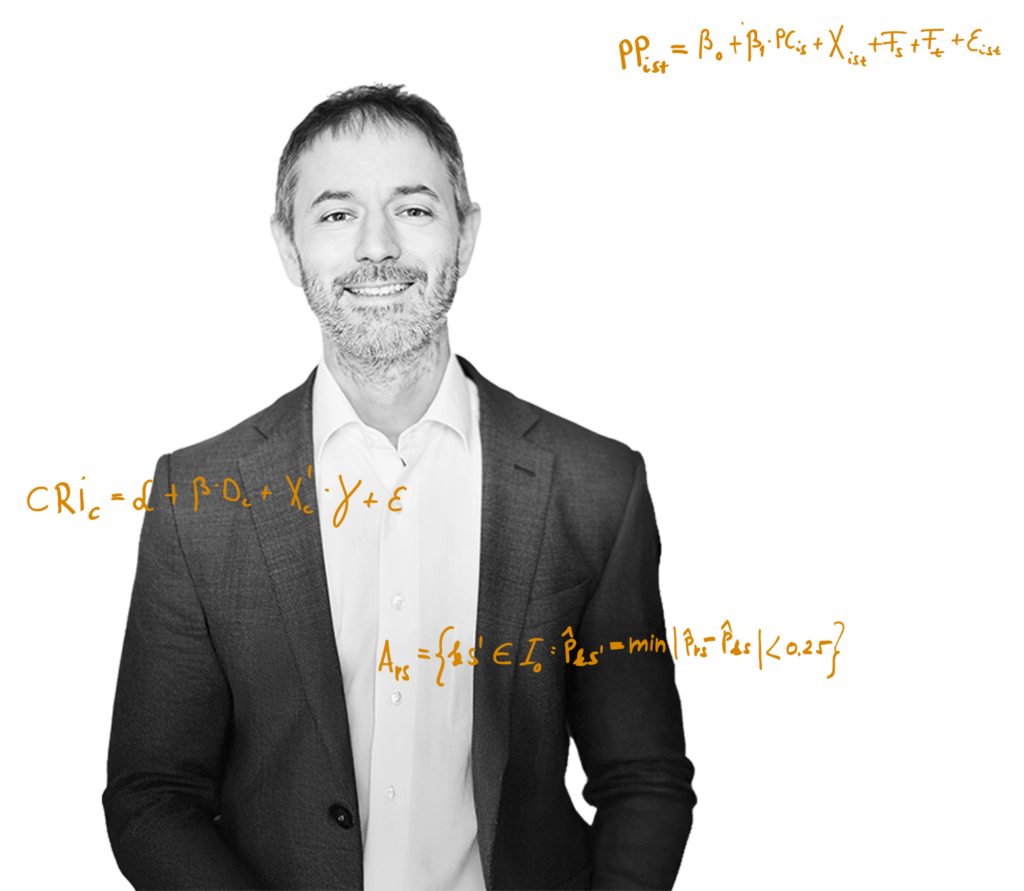
Original photograph by Wasserbauer
Mihály is a professor at the Central European University, Department of Public Policy, with a focus on using social and data science approaches to understand the quality of government. He is also the scientific director of a think-tank, the Government Transparency Institute, where he promotes the implementation of novel data-driven tools and policy reforms, tackling corruption, collusion, and inefficiencies in government spending.
He received his PhD from the University of Cambridge in 2014, with a focus on Big Data methods for measuring corruption in public procurement in Central and Eastern Europe. This pioneering research has formed the basis for his subsequent research and policy activities in Europe and globally.
His research spans across disciplines, including public policy, political science, and economics, but also data science, public health, and law. His publications appeared in flagship academic journals such as the American Journal of Political Science, Governance, World Development, Scientific Reports, or the Lancet Public Health.
His policy work is deeply rooted in rigorous and transparent academic research while offering practical and actionable insights on pressing policy problems. He has worked with a range of international organisations such as the OECD, the World Bank, UNDP, or the IMF; also including extensive policy exchanges with European Union bodies such as the European Commission, European Investment Bank, or the European Court of Auditors. He has also directly supported policy reform by national governments such as the UK, Sweden, Italy, Romania, or Spain.
Mihály has been ranked as the world’s top researcher in both corruption and public procurement according to the latest ScholarGPS rankings.




misi.fazekas@gmail.com